If you had to switch lives with a fictional character for a week, who would you choose?

Fictional characters have life. If you walk into a movie theater or theater, you sense the story. If you have read a novel or short story, those lives exist. I was taught to remember the difference between non-fiction and fiction is that fiction is false. Hard core expectations from my teachers never left me. So, when I reflect on a “fictional character ” I would trade places with for one week, it’s not a woman.

I see the glass doors of the Pershing movie theater. I walked past the movie posters outside. The pungent smell of heavily artificial buttered popcorn and cheap hot dogs wraps around each person like a warm polyester puff jacket. The zipper is all the way up! You’re trapped.  Not a bad trap. There’s lots of talking, laughing, orders being yelled out, and the OG sound of a cash register.  $5 could buy a lot in 1985.

The lights slowly fade until the theater is vibrating the previews. I had no idea if this movie was going to be good. I was with my friends. And we knew one thing for sure, Han Solo. Star Wars was EPIC! Han Solo, AKA Harrison Ford, was an all business kinda guy who WE knew loved Princess Leia. He wasn’t John Wayne or Gary Cooper. He was a new character that didn’t follow the typical co-star lines. Not to mention, Chewbaca, who was not just that tall walking carpet, was a buddy. That was more than a trusty stead. This new story took us into the 1930s.

Indiana Jones combined what I knew from my southern Baptist knowledge and love of Egyptian lore. Indiana Jones was a professor. He traveled.  He knew how to fight. His lines made me crack up! On the screen was a fantastic story in beautiful exotic places, and he does the right thing.

I knew I wanted to be a teacher. I had experience being around small kids. So, when Indiana Jones and the Temple of Doom came out, naturally I went to see it. I don’t think it was at the Pershing theater, but the Bassett Movie theater. There is a part where Indiana Jones could leave with the treasure.  He makes a stand. “Right. ALL of us!” He goes back for the children. NO guarantees of getting out alive or with the treasure or with Short Round. That moment sealed my decision to teach. Who else puts the main character to go back and save children? Then! He knows how to not let the villain gain control of the stones, and saves THE one for the Indian Village. Indiana Jones knew traditions, customs, food etiquette, accepted dress, and so many languages.  He had friends all over the globe. The only reason I want to go to Venice is because of HOW he found X marks the spot. However, I don’t think I’d have a problem with snakes. The rats? MAYBE. The sewer…for sure.

My truth for trading places for a week is just what I’ve said. Being a college professor,  adventurer, traveling, and if I could talk to my dad one last time, I’d do it in a heartbeat.  Sean Connery was the perfect fit for the dad. My dad was like Dr. Jones, father. A strong believer in God.

Indiana Jones isn’t a hero. This fictional character, male character, cracks me up, ask difficult questions, and has opportunities to show how humanity can work. Not to mention, as a kid, he had a dog.

Lessons in Education: Your voice

Teachers have a voice. There’s a voice to advocate. There’s a voice to speak up during lesson planning. There’s a voice that says, “Enough. Go home.” There’s also a voice that says, “Stop. Go chit-chat and eat lunch with your colleagues.” But don’t forget the teaching voice in the classroom. Consider that this is part of your classroom management.

How does this help someone who wants to teach? How can this help make a difference in lives? Compassion, empathy, or “making a connection” are almost always answers to the situation. One thing about learning to teach is what is not taught in college courses. Producing a voice. Every teacher needs to find their “voice”. Think of the influential teachers in your life. Think of the teachers whose “voice” discouraged you and made you wonder if you were good enough. Sometimes it’s hard to block out negative stuff. If you conquered comparing yourself to what you thought was the standard for ” a teacher”, you have a voice.

Part of the foundation for my voice comes from a combination of military readiness, a strict mom, and a lot of shows/movies that dealt with women’s independence. Also, I want to voice that not all men condemned women to a patriarchal code. There were plenty of men in American myth, aka, evening television shows, where the writers and actors were turning the page to a new chapter of women’s true worth in American society. Some may call it feminism. I call it acknowledgement of a whole gender eliminatimg the patriarchal rulebook.

Looking back, the sexism? Geez, that was some shady crap. Childhood in the 1970s and 1980s was filled with shows that had a “standard” of what a woman HAD to look like, sound like, and what her designated roles in society were. The conscious and unconscious influences from those shows and actresses have a direct link to how I guide students in the classroom to achieve their potential, even when they don’t want to see that they have potential. My voice is part of my classroom management. I don’t mess around. I don’t have a soft voice or a timid demeanor. My voice has been successful for 4 consecutive years.

Consider what you want to do with your voice. Ask yourself the following questions: How will my voice guide students? What strengths do I have with my voice? Are you afraid that if you are too strong, you will bring fear, intimidation, or apathy? Producing your teaching voice in the classroom can be the same as, or best suited to, the planning meetings, community meetings, and one-on-one meetings with your administrators, parents, and office staff. Teachers have many roles beyond being the director in the classroom. Here are some guiding suggestions.

Question 1: How will my voice guide students? I strongly support writing things down. Be objective in your writing. The only ones who will see it will be you and whoever you choose to receive feedback from. I teach middle school. At this time in a person’s life, the hormones have kicked in, the brain is not close to being mature, and families are a cornerstone of behavior in class. Guidance is all day, every day. What about elementary? I was a substitute for a number of years. I substituted every grade from Pre-K to 12th grade. I didn’t modify the job, but instead adapted to the grade. My voice was still strong. A key note in guidance was that I needed to step in and continue in the assigned teacher’s place. My adaptation was a “How-to guide little kids without missing a beat and, at the same time, being aware of some pretty smart kids who wanted to manipulate the classroom vibe”. Adaptation will happen year to year. Some years your voice will be stronger than others. Remain focused on the goal: guide students. Give yourself some time to reflect at the beginning of the year. My experience is that within about 3 to 4 weeks, I have a feel for each class. Using notes helps. Fine-tune as you continue. I remember the excellent t.v. show, Designing Women. Dixie Carter’s character was Julia Sugarbaker. And sometimes, I reflect on Mrs. Cunningham from one of my absolute favorite childhood shows, Happy Days. There was strength in both characters. They guided people. They lifted people up and put limits on bad behavior and attitudes. Reflect on characters whose influence guided you and utilize them towards guiding your classes.

Question 2: What strengths do I have with my voice? I remember a teacher who was so nice. She was one of the sweetest teachers from my childhood. She was petite. Long brown hair. And she looked like the women in my neighborhood. But that sweetness was a problem. She never really got mad. She never really “put her foot down”. She had a daily handful of horrible behaviors with some of the guys I grew up with. Then, there was another teacher who was also petite, looked sweet, but, man! Her voice commanded all of us. Considering teaching today with special education, 504, IEPs, and behavioral plan students, I think my former choir teacher saw all of us as one. There was one way to behave in her class. There was one way to be a productive and successful student. She didn’t care much for inequality. She was going to be respected by everyone. And she was respectful to us. Reflect on your outside voice. There will be times you will sound like a drill sergeant or a nun in church, or like Captain America, or like Jack Black in School of Rock. As you teach and grow with your students, don’t limit your strengths, especially when your voice is a guide to maintaining order.

Question 3: The Fear Factor: If the voice is too strong, will it bring fear, intimidation, or apathy? As a new teacher being assigned your first class, there is a feeling of hope and excitement. Students come in, and some think it will be like a hit Broadway show with hip songs and dance. The reality is you have students making farting sounds, sneezing all over the place, getting up to sharpen their pencil for the 50th time, or things being thrown across the room. It has been known for teachers to yell, slam things down, or make phone calls on the spot due to behaviors that violate the student code of conduct. Students will adapt to the teacher’s actions and fall into categories. Fear, Intimidation, or apathy. From my personal experience, apathy is the hardest to turn around. Fear and intimidation can be worked with daily. Trust must be gained with sincere actions and consistent reminders of the teacher uplifting students. But apathy is when a student has given up and does not care one way or another regarding other students, personal work, group work, projects, or themselves. To a student who grips to apathy, life in the classroom is a waste of time. One day I wrote those three words with a brief definition on a sticky note paper. I kept it on my desk. Here is what I put for apathy: a-without or lack of. Teachers are human beings. I have been there. I apologized to my students. There is grace, being humble, and forgiveness. Students need to see that. After all, we lead. And when you lead with your voice, your actions, your style, and your commitment, students tend to commit and become loyal to you, but more importantly, to life. Leaders admit mistakes.

Producing your teaching voice in the classroom will take time. Remember, you are not to be run over by anyone. The classroom is a safe place for everyone to learn. Don’t be surprised if, on some days, you will learn something. Apologies can be seen as a way to bring the teacher down. Don’t let that happen. Some of the best teachers in my life as a kid, teen, college student, and student teacher did not yell or use threats. They did not hit or insult. They were strong, demanding, and held me accountable. Now, I am strong, demanding, and hold students accountable. I can use a soft voice. But that’s not me. That’s not my style. You, someone who wants to teach, will find your voice. Your voice should never be used to isolate or hurt someone. And, don’t let someone use their voice to hurt or disrespect you. Teachers are guides. Thank you, Mr. Miyagi.
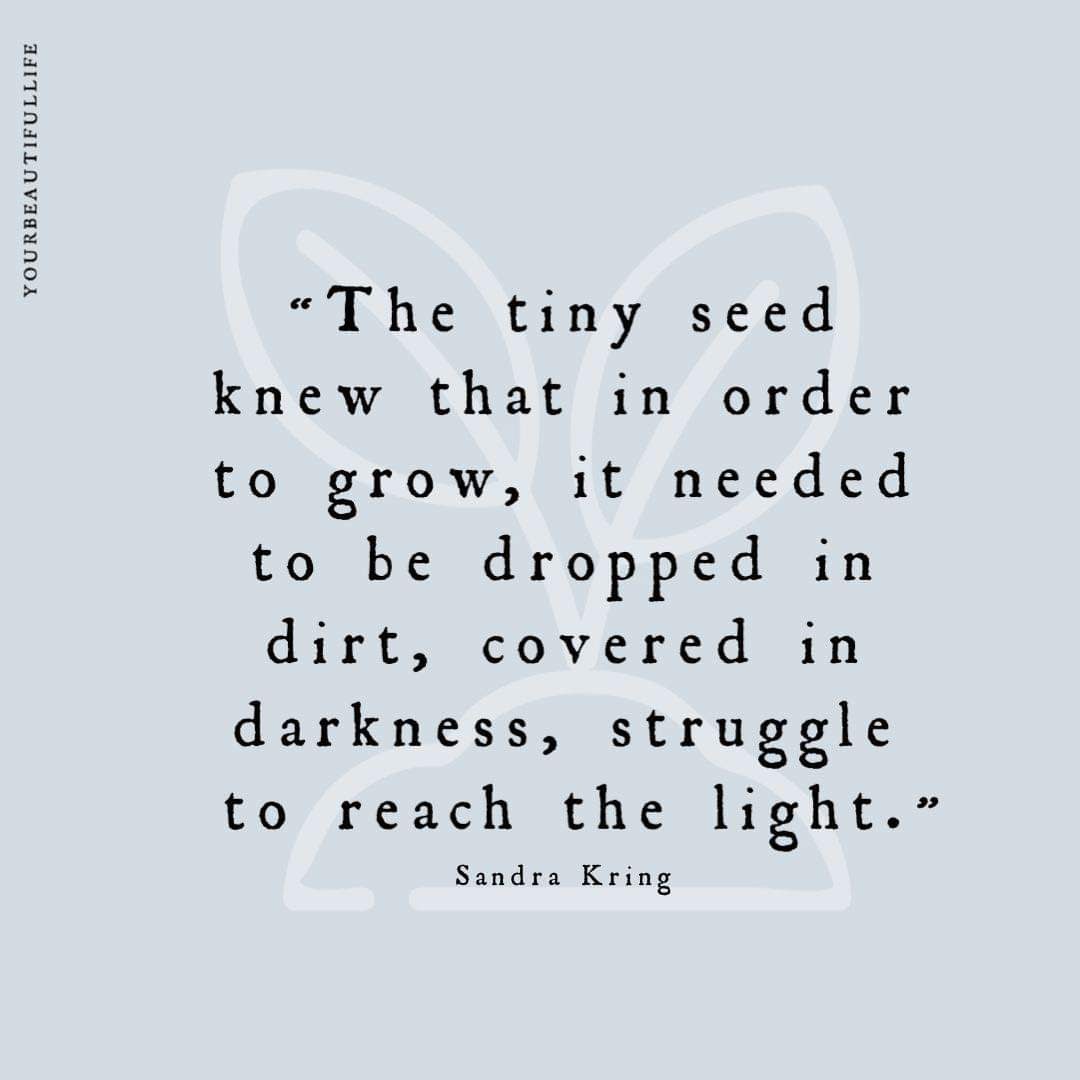
Keep Moving

What’s your #1 priority tomorrow?

Twenty five years takes my breath. I know exactly where I was and what I was doing. Getting ready for work and yelling at my kids (son 12 yr, daughter 10 yr, and daughter 8 yr)to hurry up to leave. I was in the kitchen. TV morning news KVIA was on. I heard the announcement of an incident in New York Twin Towers. I paused. I turned to view a live view of the Twin Towers. Seconds later I watched the second plane hit the second tower. My breath stopped. My shock shook me. I immediately knew we were under attack.  My next thoughts were “Where’s the next attack? Do I go to my training for Americorps? Do I take my kids to school?” By then my kids were in the living room. They were witnessing America under attack.

I checked with my group, and I had to report to training.  I took my kids to school. I listened to the radio for reports. I looked at Juarez as I drove to the Westside. What would stop terrorists from invading from there? I was almost in a panick thinking I would not see my kids again. The whole point of an institution, such as a school, is to meet basic needs. My kids were safe and with people they knew. Their teachers became a compassionate force of strength.  They were also away from their families.  I prayed my kids were not panicking and afraid like I was. I never want them to feel what I went through.

It was a long, long day. I picked up my kids after work. After staying a bit with my parents, I drove us home. TV was on the news.  I eventually walked outside my apartment about 10 pm. It was dark. It was quiet.  I looked up. I knew there were no planes. Not since the Wright Brothers had the skies been without a plane. I dont know why that thought came to me. Maybe, its the historian in me that I’ve always  been. I could see the stars. 

Americans from every nationality, creed, religion,  gender, ethnicity turned to President Bush. I didn’t vote for him. But, at that moment in time, I stood by him. Personal differences had to be left out. The composure in front of 2nd graders showed me he knew time and place for politics.

Today, People all over the nation paid tribute to the lives lost to this infamous attack. UTEP opened the Sun Bowl for anyone to walk the thousands of steps in tribute. It started in the morning.  I wanted to go. I have an injury on my leg so my priority was my health.

I went to teach. I taught my students about 9/11. There’s so much to tell. There’s so much to view. One question that came up was ,”Why attack New York?” That’s leads to rocky soil means you can’t grow, however there are ports and harbors. That lead to trade. I also told them how it impacted El Paso. The border was shut down. No one or anything was allowed to move. For my students, families come and go all the time on the bridges. If you lived in Juarez, you were stuck here and vice versa.  That struck home with my students. How would you get home? How long til you get home? Who would watch the kids? What about my job?

As I finished the day, I reflected on a family trip to Boston and New York City in 2002. It was a huge family trip. We went to see history and talked with the firefighters that were alive from the attack. New firefighters had joined. It was a good thing to hear and see them. They’re hospitality was a show of strength and compassion to us Texas and Arizona folks.

So my question to you is What Will You Prioritize?  Will you get in shape to do the 1000 steps at aUTEP in 2027? Will you post to all the families that lost their loved ones “I will honor your lovedone”? Will you donate to charities?  Help where you can despite anyone’s nationality n creed, ethnicity, religion, and gender?

Start now. Live everyday one day at a time. Forgive if you fail.  Tell yourself “My priority is ….” Your success includes rest, reflection, acknowledgement, action, and praise.

Until next week,  your life is already in live view. Smile for the camera!

Lesson in Education: Default Nostalgia

My memory has a default. Coldwell
Its a routine. I look at the sky and depending on the deepness of the El Paso blue sky, I can remember one of the grade levels I was in. Bright blue and sunny was dreadful at times for the ever popular class of P.E. The infamous “mile” was something I hated but not because I was afraid of running. It was running up against the fastest and prettiest girls. That was cred in our book. I loved running, but I always felt like something was tied around my legs holding me back from going full blast! I hated it. I was not the fastest. But, I wasn’t the slowest. I was ok. There were times it felt like a let down in my family.
Its hard for me to hear that P.E. has been taken out of Texas schools. At a time when human beings have digital access pretty much everywhere in their life, WHY TAKE AWAY PHYSICAL EDUCATION? This is a huge mistake. Look at the person to your left then your right. Do they have a cell phone, tablet, headphones/air buds, smart watch, or laptop? More than likely. The responsible adults have cars with wi-fi to view apps or watch something. And of course, those little humans follow along. They don’t get that technology on their own payment plan, do they?
This didn’t happen overnight. This was planned by design by people who have not been in the classroom to teach. There’s been a hug push for technology since the early 2000s. Several entire rooms were cleared out and filled with computer labs. The curriculum to teach handwriting was also cut out. There were several teachers that were specifically told to stop teaching hand writing or get written up. The new thing was students were going to learn how to use computers. That huge push hasn’t stopped. The year is 2025 and students are issued laptops. Parents/guardians buy the cell phones/smart watches/ tablets/ and head gear. What a perfect world for today’s kid?
Flashback to the 1970s and 1980s. Maybe the 90s. Things had to be earned. Yes, there were some kids we knew that got everything they wanted. I am talking about the rest of us that had to work in the house, the yard, babysitting, or whatever else to “earn” Atari, a bike, cassette player, or skate board. My brother had a paper route. That was to help the family. My other brothers had their jobs as well. The majority of our friends had to work. New tennis shoes that I wanted? That meant cleaning a lot and taking up my brothers’ chores to work at those shoes. I had a cassette headphone player because it was a hand me down from my brothers. That is how we got stuff. The technology was not needed for communication. Now, it is.
I also was part of the parents group that bought a cell phone for my young Green Day era son. Those days were “Nobody talks til after 9 pm!” Minutes took on a way of currency in some cases. I did stick to the hand me down route with my other kids. Years later my youngest daughter also got a hand me down cell phone. Here is the difference, I limited the time on it. Trips to Barnes and Nobles and the public library were high on our list of weekly to-do things. It was a struggle to find a way to buy books, but we did it. The phone was a status thing for my kids as the latest VANS or Nike shoes were in my youth. I haven’t missed how a cell phone is a status icon.

The cell phone was a communication device. I remember a young second grader who had a smartwatch and her mom worked at the school. She would communicate with her mom where she was and what she was doing. That was a sign that the days of calling the classroom or teacher were over.


This is also a sign of how students do not know how to read or write at their grade level. Students on every level from middle school thru high-school complain they have to write more than three sentences or beyond a couple of paragraphs. I have known students that have said they don’t need to know how to read or write because the computer or AI will fix it. As a teacher that’s concerning and a red flag. For most parents, it’s not their problem. That is the teachers responsibility and fault. They don’t say that if their kid can’t run or play ball, though.
Flashback to nostalgia: I remember looking out the windows and seeing the clouds. Great reading weather. We read books. We knew how to use a dictionary and encyclopedias. Parents were “Go find the answer.” Yes, this was a problem for us. How can I find a word I can’t spell?
“Figure it out.” <—Most parents. People had phone books. Most of us knew phone numbers. Not today. Students have cell phones, but do not know their own parents contact information. Educators have two thoughts in their heads when they hear this: “That’s your mom? You don’t know her number?” And then, the other question that comes up, “Why didn’t your parents make you memorize their number?” Students can remember lyrics to inappropriate lyrics, tic-toks, Instagram posts, and the current way to spell the creative content creators name(s). Parents hold the majority of the cards for what teachers have to work with. How can a parent get mad and demand the teacher be responsible because their kid can’t read and at the same time not feel responsible for not teaching their kid to memorize their info? In 40 years parents don’t want to be held responsible for their child’s education, but will give all the technology needed to avoid a solid education.
I look outside and I see clouds in a deep blue sky. I feel the wind getting colder as I listen to Green Day’s “Wake Me Up When September Ends”. I can go outside and walk and enjoy the change in seasons at this time of year in my hometown. As your reading this, do you know what this time of year is? Does your kid? Maybe ask them. Talk about how this time of year its not just viral pumpkin drinks or sweater posts. Its your time. Your time to walk and listen to each other’s music. Talk about what is crucial in this time of year. Your time with each other. And, if you must, take your electronics. Take pictures of the sky, the sunset, the birds, and your neighborhood. What does it smell like? Autumn has a variety of smells. The colors of autumn will vary. The song playing on the way home. I have those songs in my head a lot at this time of year. I remember my family and my friends. I especially have that default. I don’t know if if will ever be a default in your life, but give it a shot.

Physical education may be out of the curriculum for schools, but don’t let electronics compound that. Walking, running, riding a bike, riding a skateboard, playing soccer, tennis, football, and ping pong are great things to do.

The day to day walk in every weather

I remember the way the rocks felt under my shoes. Sometimes they were wet. Most days they were dry. The days that it snowed, they were quiet. Walking to and from school were the moments I usually walked to alone. My five senses were alive in my neighborhood. There was inspiration from the birds tweeting, ants crawling, taste of dirt as a car drove by, sun on my skin, and best of all the smell of real food that was coming from the school cafeteria. Walking to school day to day in every weather was my lesson in “You will get to school and be on time…or else.”

Labor Day, Halloween, New Year’s day, May 5th

The school year started after Labor Day. The weather was warm on the way there and HOT on the way back. Halloween the weather started to get cooler in the mornings and warm in the afternoon. New Year’s day was cold both ways. May 5th marked cool mornings and warm weather on the way back. Walking to school was expected and completed by myself. I didn’t know it at the time, but I had an understanding of being responsible. I was responsible for getting to school on time. I had learned to set a schedule. I knew what time to leave out the front door to get to my class before the tardy bell. Being tardy was 100% unacceptable with my parents. Being tardy meant getting yelled at and sometimes getting the belt as punishment. I have seen students walk to school during all my milestones. My classroom is a safe place to come into from all the elements. I do set the expectations that every student is on time. That expectation sets the tone for students to practice responsibility, dependability, and discipline of their own actions. They don’t know it, but this practice will be one of their expert skills in life.

The lesson of dealing with DREAD

Walking to school sometimes was filled with dread. On the way to school, didn’t finish my math homework; didn’t bring my meal ticket; didn’t know if my one best friend was going to be at school; didn’t want to run the mile in P.E. These major issues were with me every step. Today as I drive to work, I see some students walking to school. What dread thoughts are they dealing with? The lesson of dealing with dread as a kid has the teacher in me contemplate that dread is going to come into my classroom. To counter the dread, I greet each student with either a high five or knuckles. Some students do not want to be touched. So every student is given a smile and friendly eye contact. I say their name as they walk in. I affirm they presence is welcomed and dread is not.

Time to Think

Walking to and from school was the time to think. The only person there hearing the way the rocks sounded was me. But, my neighborhood was a stage where I practiced my craft of writing, drawing, going over what I could of said in the argument with some of the kids at school. If I was going to be able to watch one of my shows in the living room that night. How I could of done better on my test. How I could be a better athlete like my brothers. How I wish I was pretty and popular like Monica Chavez, Debbie Papa, Irene Loy, Laura Marcial, and Yvonne Ramos. Why was my mom always so tough when I wanted to open up to her. Who shot JR? What are students thinking about as they walk to school? Most students I see in the morning are walking alone. But, in the afternoon, I see most students walking in groups. I am able to use this information for background knowledge of students. Students come in to the classroom with thoughts all over the place. My classroom has to have a focus. I frame the lesson and what activities are best for that class. The classroom management is to keep student actively engaged with chief bucks to keep that focus throughout the class time. Each class can be the same, but this is middle school. Each class is going to be different. Getting to know how students have relationships outside my classroom, gives insight to how my philosophy in teaching will proceed each class.

Being responsible, dealing with dread, and time to think by walking to and from school were vital to me as a kid. Now as a teacher, students have the same things to go through but not from my past. I have developed this parallel in writing. It is extremely important to understand students are dealing with today’s technology, current events, family dynamics, and school culture for being responsible, dealing with dread, and time to think.

Officially Elizabeth Abilez

Most teachers can relate to a time in their childhood that presented itself that they were destined to be a teacher. My childhood was that presentation. I attended Coldwell Elementary. It was Kindergarten through the 8th grade. I was fortunate to have attended Coldwell from Kindergarten through 8th grade. I don’t remember the exact day I knew I wanted to be a teacher. Maybe, it was on a rainy day inside a quiet classroom where I could smell the wonderful handmade food from the cafeteria. Maybe it was the warm sunny mornings walking to school and seeing my school getting closer. I could hear kids on the playground. I could see teachers walking into the school. It was my school. It was my life for 9 consecutive years. Here is where education became the foundation of my life. This was the first lesson in teaching.

I am a certified professional teacher in social studies middle school. I recently passed the edTpa alternative certification process with my alma mater University of Texas at El Paso. I have completed my one-year residency for the alternative certification program which was from January 2021 to December 2021. The program pairs up with a mentor teacher. This program provided me with support, experts, and quality courses to zero in on my focus to teach history to all students.

I come from a strong willed family. It was my parents that set the bar for all us to graduate from college. It is in our DNA to teach. My father was from a small little town of Junction, Texas. My mother is a native of El Paso aka Chuco town. They were first generation college students. They set the tone for my five brothers and I to “get a college education!”. My parents grew up and were not middle class. They were not rich. They grew up very poor. But that was just the economics. My parents were taught to be first class in their academic achievements. Dedication to honest work. And the virtue of faith was the cornerstone of their childhood. The lesson that your education is something that cannot be taken from you was taught over and over day by day, year by year by my parent’s central focus that my siblings and I were going to have a college education because they knew were capable of achieving it. But, most importantly, it was our right to have an education. That cannot be taken away.

The mission of this blog is to introduce many lessons for teaching from my experience in my teacher residency and my first-year teaching. I had the best mentor teacher anyone could ask for. One important lesson I can pass on is that we as professionals need to help each other. I was welcomed into my assigned school by the faculty and staff. It was the first time that I was aware that I was seen as a professional teacher. I wasn’t a substitute on a long-term assignment. I was a teacher!

Why do this?

  • I would like to assist future teachers with edTpa.
  • I would like to share lesson plans which will show differentiation strategies, ELL strategies, and small group modifications.
  • I would also like to share the struggles of teaching students, having empathy for parents, and collaborating with teachers.
  • I will be writing how my education led the way to my professional teacher status.
  • I will be sharing inspirational and motivational self-care ideas because teachers need to know that our mental, physical, emotional, and spiritual health is a priority.

Lastly, I am dedicated to being a professional teacher in social studies. I am a dedicated woman who persevered over roadblocks, tragedies, and pain to attain my certification to teach. One important thing I remember when I step into a classrooms is the saying “Walk like you have 3000 ancestors behind you”. I intend to have you along for the journey.

Introduce Yourself (Example Post)

This is an example post, originally published as part of Blogging University. Enroll in one of our ten programs, and start your blog right.

You’re going to publish a post today. Don’t worry about how your blog looks. Don’t worry if you haven’t given it a name yet, or you’re feeling overwhelmed. Just click the “New Post” button, and tell us why you’re here.

Why do this?

  • Because it gives new readers context. What are you about? Why should they read your blog?
  • Because it will help you focus your own ideas about your blog and what you’d like to do with it.

The post can be short or long, a personal intro to your life or a bloggy mission statement, a manifesto for the future or a simple outline of your the types of things you hope to publish.

To help you get started, here are a few questions:

  • Why are you blogging publicly, rather than keeping a personal journal?
  • What topics do you think you’ll write about?
  • Who would you love to connect with via your blog?
  • If you blog successfully throughout the next year, what would you hope to have accomplished?

You’re not locked into any of this; one of the wonderful things about blogs is how they constantly evolve as we learn, grow, and interact with one another — but it’s good to know where and why you started, and articulating your goals may just give you a few other post ideas.

Can’t think how to get started? Just write the first thing that pops into your head. Anne Lamott, author of a book on writing we love, says that you need to give yourself permission to write a “crappy first draft”. Anne makes a great point — just start writing, and worry about editing it later.

When you’re ready to publish, give your post three to five tags that describe your blog’s focus — writing, photography, fiction, parenting, food, cars, movies, sports, whatever. These tags will help others who care about your topics find you in the Reader. Make sure one of the tags is “zerotohero,” so other new bloggers can find you, too.

Introduce Yourself (Example Post)

This is an example post, originally published as part of Blogging University. Enroll in one of our ten programs, and start your blog right.

You’re going to publish a post today. Don’t worry about how your blog looks. Don’t worry if you haven’t given it a name yet, or you’re feeling overwhelmed. Just click the “New Post” button, and tell us why you’re here.

Why do this?

  • Because it gives new readers context. What are you about? Why should they read your blog?
  • Because it will help you focus your own ideas about your blog and what you’d like to do with it.

The post can be short or long, a personal intro to your life or a bloggy mission statement, a manifesto for the future or a simple outline of your the types of things you hope to publish.

To help you get started, here are a few questions:

  • Why are you blogging publicly, rather than keeping a personal journal?
  • What topics do you think you’ll write about?
  • Who would you love to connect with via your blog?
  • If you blog successfully throughout the next year, what would you hope to have accomplished?

You’re not locked into any of this; one of the wonderful things about blogs is how they constantly evolve as we learn, grow, and interact with one another — but it’s good to know where and why you started, and articulating your goals may just give you a few other post ideas.

Can’t think how to get started? Just write the first thing that pops into your head. Anne Lamott, author of a book on writing we love, says that you need to give yourself permission to write a “crappy first draft”. Anne makes a great point — just start writing, and worry about editing it later.

When you’re ready to publish, give your post three to five tags that describe your blog’s focus — writing, photography, fiction, parenting, food, cars, movies, sports, whatever. These tags will help others who care about your topics find you in the Reader. Make sure one of the tags is “zerotohero,” so other new bloggers can find you, too.